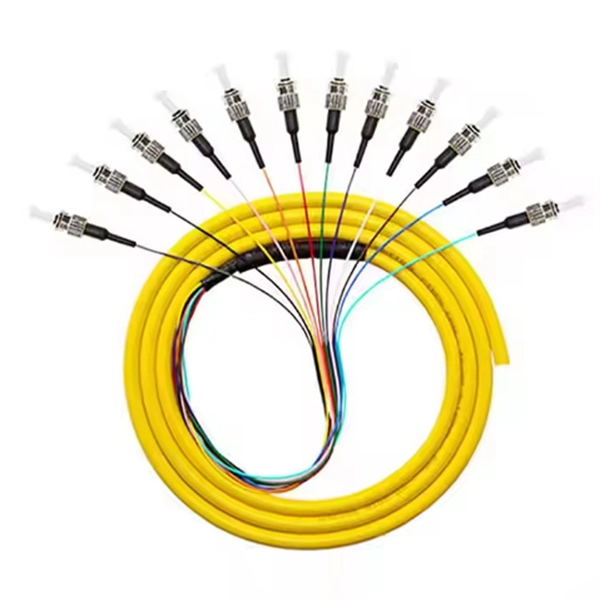
A core switch is not inherently an optical switch; it is a high-capacity network switch that may include optical ports but primarily functions as the backbone of a network.Core Switch Overview
A core switch serves as the central hub in a network, managing high-speed data traffic between distribution switches and routers. It is designed for high performance, scalability, and redundancy, ensuring reliable communication across large enterprise networks or data centers . Core switches typically operate at Layer 2 or Layer 3, supporting advanced routing protocols, access control, and quality of service (QoS) features . They aggregate traffic from access and distribution layers, providing low-latency, high-throughput connectivity .
Optical Switch Overview
An optical switch, on the other hand, is a device that routes data entirely in the optical domain, using light signals instead of converting them to electrical signals . Optical switches are used in fiber-optic networks for dynamic wavelength routing, protection switching, and high-bandwidth data transfer. They operate at the physical layer and are transparent to data rates and protocols, making them suitable for dense wavelength division multiplexing (DWDM) and optical time-division multiplexing (OTDM) networks .
Relationship Between Core Switches and Optical Switching
While core switches can include optical ports to connect fiber-optic links, this does not make the switch itself an optical switch. The core switch still processes data electronically, even if the physical interface is optical. In some high-end data centers, hybrid setups may combine core switches with optical switching technologies to optimize bandwidth and reduce latency, but the core switch remains fundamentally an electronic device .
Key Takeaways
- Core switches: High-capacity, electronic network switches forming the backbone of a network; may have optical interfaces.
- Optical switches: Devices that route data entirely in the optical domain without electrical conversion.
- Overlap: Core switches can use optical ports for fiber connections, but they are not true optical switches. In summary, a core switch is not an optical switch, though it may interface with optical networks through fiber ports for high-speed connectivity .